

Rewilding Giants: The Remarkable Expansion of Addo Elephant National Park

Updated: 6 days ago

Background: From 11 Survivours to a Thriving Ecosystem
In 1931, something extraordinary and urgent happened in South Africa’s Eastern Cape. The government proclaimed Addo Elephant National Park to protect a tiny, desperate population of just 11 elephants, all that remained after decades of hunting and habitat loss. Today, that once fragile remnant has evolved into one of the greatest conservation success stories in the world.
The park now supports over 600 elephants, alongside a rich diversity of wildlife. What makes this story especially compelling is not just population recovery, but landscape-scale rewilding through expansion.
The Expansion: From Small Reserve to Mega-Park
Originally, Addo covered a modest 2 000–2 500 hectares. Today, it spans roughly 180 000 hectares, with long-term plans to grow even further into the Greater Addo Elephant National Park, a connected “mega-park” linking land and sea.
This expansion has included:
Incorporating the Woody Cape coastal forests
Adding Zuurberg mountain landscapes
Establishing a marine protected area including Bird Island and St Croix
Creating corridors to reconnect fragmented habitats
The result is something rare: a park that stretches from arid Karoo landscapes to the Indian Ocean, protecting five different biomes in a single conservation system. This is rewilding at scale, restoring not just animals, but entire ecological processes across diverse environments.

A “Big 7” Conservation Model
Addo is one of the few places on Earth where you can encounter the so-called “Big 7”:
Elephant, lion, rhino, buffalo, leopard
Plus southern right whales and great white sharks offshore
This is only possible because of expansion into marine areas, an unusual and innovative rewilding approach that links land and ocean ecosystems.
Fascinating Facts About Addo’s Elephants
Addo’s elephants are not just numerous, they are unique:
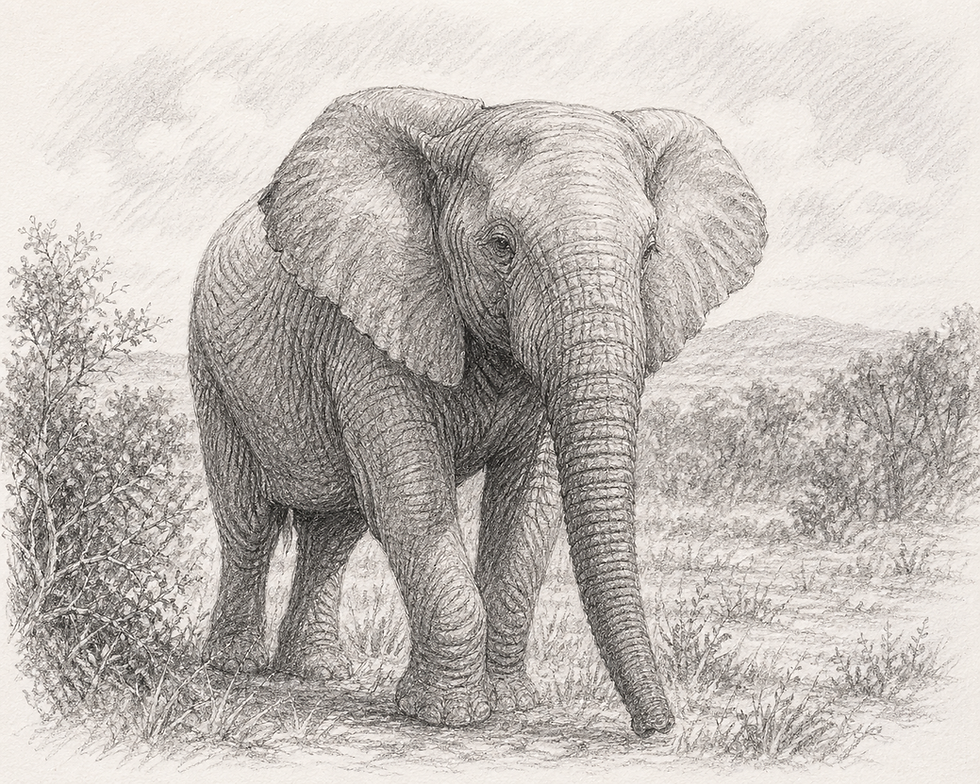
Many are/were tuskless, a genetic trait linked to historic overhunting, where these elephants evolved to survive. Following the rewilding of the Kruger elephants to Addo, most Addo elephants now proudly have tusks once more.
They are known for being unusually calm or “chilled” compared to other populations
Bulls can weigh up to 5 400 kg
The park has seen a population increase of over 5 000% in under a century
Even more intriguing: Addo is home to the flightless dung beetle, a tiny but critical species that helps recycle elephant dung and maintain ecosystem health. It’s a reminder that rewilding isn’t just about big animals, it’s about entire ecological networks, from giants to insects.
Why Expansion Matters for Rewilding
The expansion of Addo is not just about size, it’s about functionality.
1. Space restores natural behaviour
Larger landscapes allow elephants to:
Migrate naturally
Avoid overgrazing
Maintain healthier social structures
2. Biodiversity rebounds
Today, the park supports:
91 mammal species
Over 400 bird species
3. Ecosystems reconnect
By linking fragmented areas, Addo is moving toward a system where:
Predators regulate herbivores, While healthy adult elephants have almost no natural predators besides man, younger calves and weakened individuals face threats from lions, hyenas, crocodiles, and wild dogs.
Vegetation recovers dynamically
Marine and land ecosystems interact

The Bigger Picture: A Blueprint for Africa
Addo’s expansion reflects a broader shift in conservation thinking:
Protecting isolated pockets of wildlife is no longer enough, we must rebuild connected, functioning ecosystems.
The Greater Addo vision aims to:
Create ecological corridors
Support sustainable tourism
Balance conservation with local communities
It’s a practical model of rewilding in a human-shaped world, demonstrating how conservation can effectively coexist with development.
Conclusion
From 11 elephants on a shrinking patch of land to a vast, multi-biome conservation network, Addo Elephant National Park represents one of the most inspiring rewilding stories anywhere on Earth.
Its expansion shows that:
Recovery is possible, even from near extinction
Scale matters in conservation
True rewilding means restoring relationships between species, land, and sea


Comments