

When the Rains Don’t Stop: Climate Change and the Eastern Cape Storm Crisis

Recently, severe storms in Gqeberha caused widespread flooding. In our complex, the boundary wall collapsed due to water buildup, flooding houses, destroying cars, and causing water damage. On William Moffett Roadway, sections of the road were washed away, new potholes formed, and existing ones worsened, damaging vehicle tires. Additionally, the Metro struggled to address power outages and water disruptions, as reservoirs emptied due to these outages.

Jump ahead four weeks, and we are once more anticipating approximately 200mm of rain over the next two days. Is the municipality better prepared this time, or will the same problems arise in the Nelson Mandela Bay Metropolitan? Several businesses are closing in anticipation of the storms, and schools are also taking similar measures.. Let's hope this storm isn't as severe as the last one, especially since most soil is still retaining some moisture. Let's now take a deeper look into how climate change is affecting the rainstorms in the Eastern Cape.
A Province Under Pressure
In May 2026, the Eastern Cape once again found itself grappling with severe storms, flooding, and widespread disruption. Intense rainfall, strong winds, and overflowing rivers caused damage to infrastructure, displacement of communities, and emergency evacuations. In some areas across southern South Africa, rainfall exceeded 300mm in just a few days, overwhelming dams and forcing people from their homes. These events are not isolated. Instead, they are part of a growing pattern of extreme weather affecting the region with increasing frequency and intensity.
Understanding the Climate Change Link
Scientists and environmental researchers are increasingly confident that climate change is amplifying these storms. Warmer global temperatures mean the atmosphere can hold more moisture, leading to heavier rainfall when storms occur. Studies across southern Africa show that extreme rainfall events have intensified significantly due to human-driven climate change.
In simple terms:
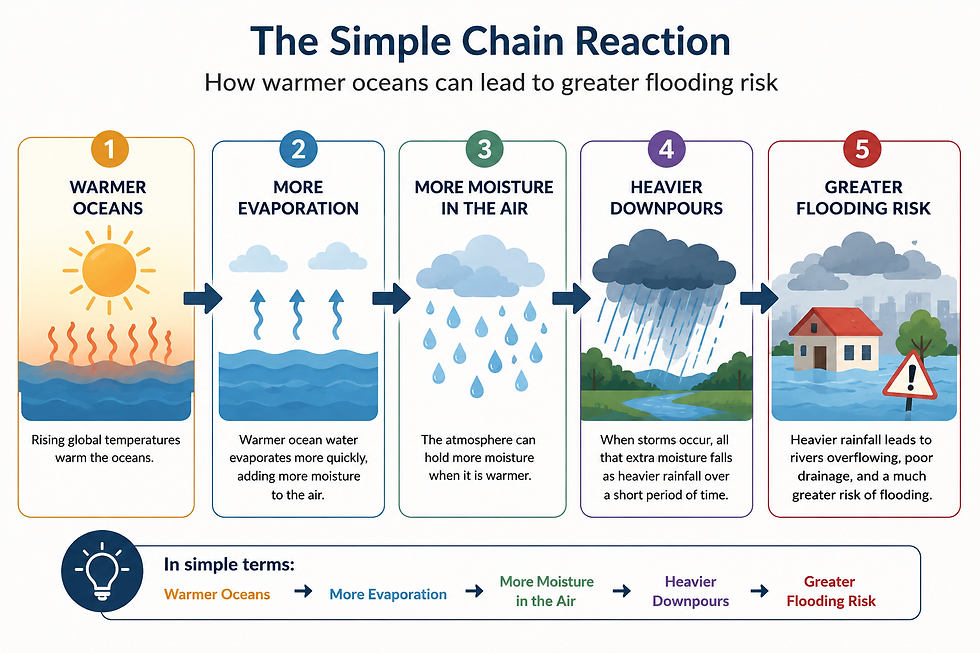
This chain reaction helps explain why storms that may once have been manageable are now causing widespread destruction.
Why the Eastern Cape Is Especially Vulnerable
The Eastern Cape is particularly exposed to climate-related disasters due to a combination of geography and socio-economic factors. Many communities are located in low-lying or flood-prone areas, often with limited infrastructure to cope with extreme weather. Past disasters show a clear trend. Flooding in recent years has repeatedly damaged homes, schools, and roads, while displacing thousands of residents. Urban planning challenges, ageing infrastructure, and informal settlements further increase vulnerability. When heavy rains arrive, drainage systems are often unable to cope, turning streets into waterways and rivers into hazards.
A Climate Change Pattern, Not a One-Off Event
One of the most important insights from recent research is that these storms are no longer rare. Events that were once considered “once-in-decades” occurrences are happening far more often. In fact, scientists suggest that some extreme rainfall events are now twice as likely due to climate change.
This shift is part of a broader climate trend affecting southern Africa:
More intense storms
Longer dry spells between rains
Increasing unpredictability of seasons
The result is a climate system that swings between extremes: drought on one end, flooding on the other.

Human and Environmental Consequences
The impact of these storms goes far beyond immediate damage. Communities face:
Loss of homes and livelihoods
Disruption to schools and healthcare services
Increased risk of waterborne diseases
At a national level, repeated disasters have forced the South African government to declare states of disaster and mobilise emergency resources.
Environmentally, flooding can :
erode soil,
damage ecosystems,
and pollute water systems, creating long-term challenges for both people and biodiversity.
What This Means for the Future
The growing link between climate change and extreme weather in the Eastern Cape highlights a critical reality: these events are likely to become more frequent and more severe.
Without meaningful intervention, the province could face:
Increased displacement of vulnerable communities
Greater economic strain from repeated infrastructure damage
Escalating disaster response costs
However, solutions do exist. Improved urban planning, stronger infrastructure, early warning systems, and climate adaptation strategies can significantly reduce risk. At the same time, global efforts to reduce greenhouse gas emissions remain essential to slowing the underlying cause of these changes.
Conclusion
The recent storms in the Eastern Cape are not just weather events; they are part of a larger climate story. As scientific evidence continues to grow, the connection between extreme rainfall and climate change becomes harder to ignore. Understanding this link is crucial, not only for responding to current disasters but for preparing for a future where resilience and adaptation will be key to survival. Stay warm and stay safe.


Insightful and well written!